
The Receding Russian Ghost
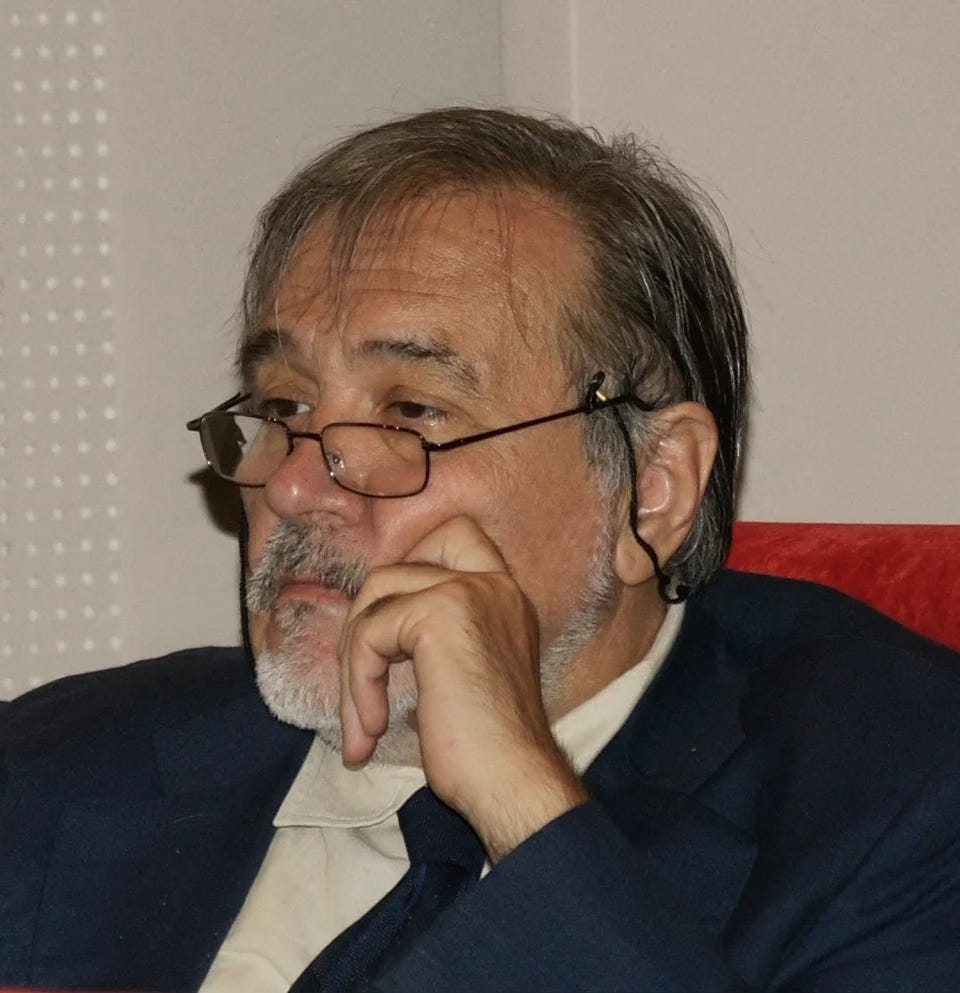
Reflection on the death of İlber Ortaylı, a prominent Turkish historian

It began in Crimea.
Its loss was not merely territorial. When Russia annexed it in 1783, it struck so deeply that the loss entered poetry.
Though the infidel casts spells against Islam,
we too have God’s Greatest Name at the ready.
They have enslaved so many Tatars, one by one.
Shall Crimea remain like this in the hands of the unbelievers?

Let me send the Ottomans into war.
Let me strike with the cleaver that infidel foe.
Let me go and take revenge on the unbeliever.
Shall I remain like this with my eyes open?
This poem is attributed to the future Sultan Selim III and is said to have been written in response to the loss of Crimea. The poem does more than express anger. It portrays the loss of Crimea as more than a strategic setback. It portrays it as the breach of a larger political and civilizational world.
Crimea was just the beginning though. More painful was on the way. Throughout the 19th century the Ottoman Empire retreated further from the Black Sea basin, the Caucasus, and the Balkans and left behind many more Muslim and Turkic communities under Russian rule, or under the rule of newly founded Christian states. Some Muslims/Turks stayed where they were. Others moved into the shrinking Ottoman realm. What they carried with them was a grief, a refugee memory.
That inheritance shaped how many in modern Turkey came to see history. That history could not be reduced to the territory of the republic alone. It also included lost provinces.
Out of that human stock grew one of the most influential intellectual streams in late Ottoman and modern Turkish thought. That stream in fact gave Turkish nationalism some of its key thinkers such as İsmail Gaspıralı, Yusuf Akçura, Zeki Velidi Togan, and Ahmet Ağaoğlu.
Out of the same human stock also came such towering figures of the Ottoman/Turkish historiography as Halil İnalcık and Kemal Karpat, both of whom descended from Crimean Tatar immigrant families.
İlber Ortaylı came out of that same world. Born in 1947 in a refugee camp in Bregenz to Crimean Tatar parents who had fled Stalinist persecution, he entered Turkey as someone already marked by a history larger than the republic itself. His significance lay not only in his learning, but in the horizon from which he looked. He could look at Turkey and its history from a world that was at once Ottoman. In that sense, he was not simply an eminent historian. He was one of the last major public bearers of a migrant, imperial historical consciousness.
With Ortaylı’s death, the Russian ghost in Turkish historical consciousness has not vanished, but certainly receded from the center.