
Small, Rich, and Exposed
The Gulf Monarchies’ Security Dilemma

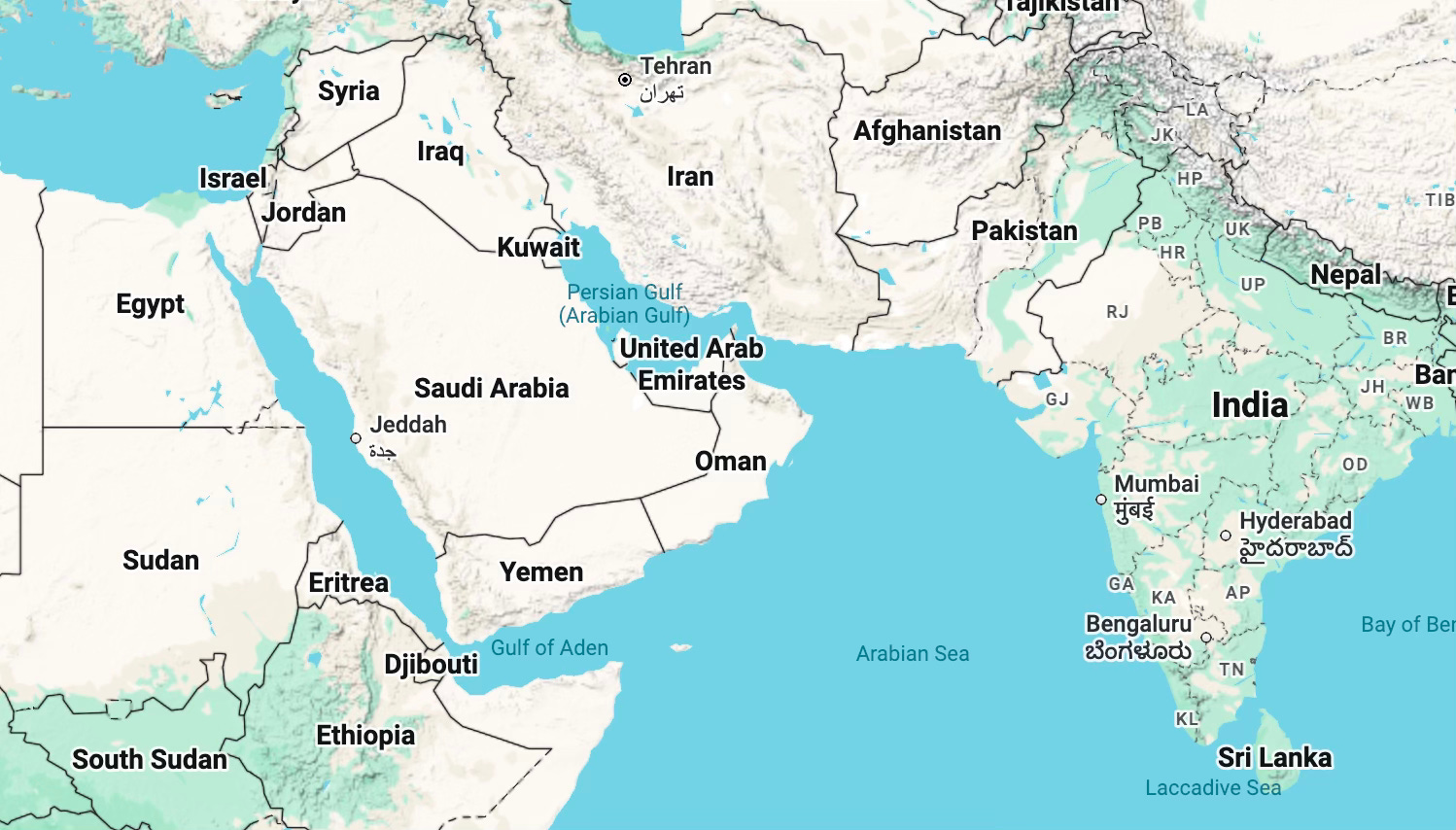
Kuwait, Qatar, Bahrain, and the United Arab Emirates are among the richest countries in the world. In 2024, their average GDP per capita stood at about $48,000. Yet they are demographically tiny. In the same year, their combined population was only about 20.3 million. But, out of that, around 9.5 millions were citizens.
Around them lay a far larger world: about 643 million people (without India) or (2.09 billion with India). Most of this surrounding world is much poorer. In 2024, its average GDP per capita stood at roughly $3,300 (with India), or about $4,600 (without India) or about $2,112 (without India, Saudi Arabia, and Oman).
This basic structural fact lies behind the security dilemma of these smaller Gulf monarchies: extraordinary wealth concentrated in very small states, exposed to a much larger, poorer, and often unstable regional environment.
According to the latest World Bank estimates , Bahrain had about 19,000 military personnel, Kuwait about 25,000, Qatar about 22,000, and the UAE about 63,000. It is a plain fact: these Gulf states face serious limits in building deterrent military capabilities.
They partly compensate for this limitation by buying advanced weapons systems. And these systems have shown real value in practice, as we saw in recent interceptions of Iranian missiles and drones. But such systems are far less useful when it comes to territorial defense or a large-scale ground threat. For that reason, these states depend on an external security guarantor, above all the United States, whose role in Gulf security is consolidated in the military bases, naval facilities, and defense partnerships it maintains across the region.
But this protection comes at a price. It ties their security to American decisions. They have their own problems with Iran, but those problems do not necessarily have to escalate into a war of this scale. Once the United States entered direct conflict with Iran, these states could not escape the consequences.
Legally speaking, the four Gulf states are not full belligerents in the ongoing war. They have not even responded to Iranian attacks in kind. But they are not fully neutral as well. They host U.S. bases, surveillance infrastructure, and integrated air-defense networks. Gulf states may deny that they opened their airspace to U.S. operations, but that does not end the debate. The real question is whether American bases, radars, surveillance systems, and integrated defense infrastructure on their territory are part of the US war effort.
In fact the Gulf monarchies understood this danger in advance. They seem to have warned Washington before that a U.S. attack on Iran could make them targets in return. So they knew that, in the event of war, they too could become targets of Iran. But why did they think so? Just because they are U.S. allies? I do not think so.
So, the four Gulf states are trapped. They are too small to secure themselves alone, but dependence on a superpower means that that superpower’s war is also their war. By purchasing protection, they forgo neutrality. And so long as their security rests on outside power, their fate will remain tied not only to their own enemies, but also to the decisions of their protector.